

On a rainy evening in Seoul, a product manager named Jae-min found himself staring at two dashboards. One tracked user engagement inside his app—clicks, sessions, retention curves. The other showed something harder to quantify: how users behaved after they logged off. Did they act differently? Did the product actually change anything in their real lives?
That tension—between digital interaction and real-world outcome—is where a concept like realitykubgs begins to take shape. It’s not a mainstream framework yet, nor a defined industry standard. But for entrepreneurs, tech readers, and founders navigating the next phase of product evolution, it offers a compelling lens: how digital systems translate into tangible, lived experiences.
What Realitykubgs Really Means
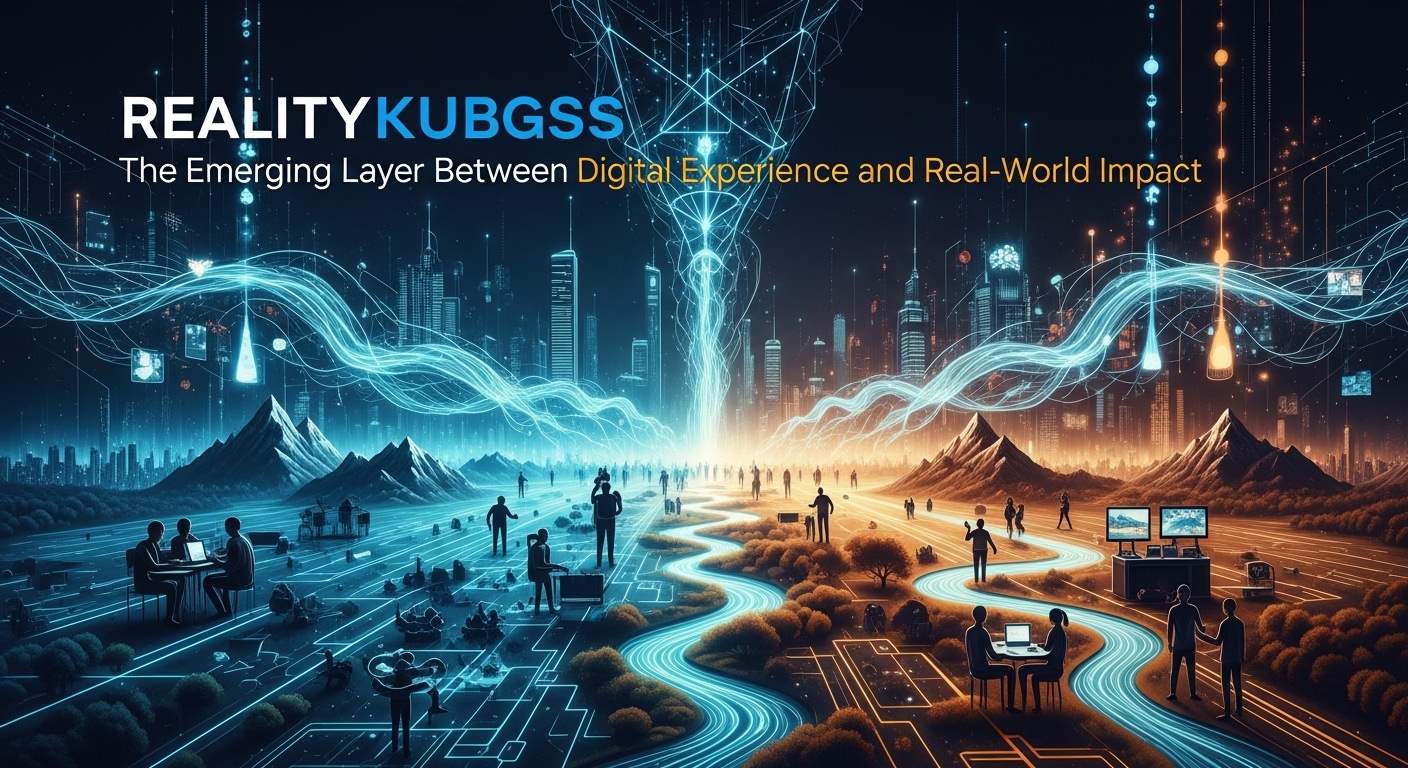
At its simplest, realitykubgs can be understood as the bridge between virtual engagement and real-world behavior. It focuses on how digital products don’t just capture attention, but influence actions, decisions, and outcomes beyond the screen.
This idea challenges a long-standing assumption in tech: that success is measured primarily within the platform. Metrics like daily active users, session duration, and conversion rates have dominated product thinking for years.
Realitykubgs suggests something broader. It asks whether those metrics actually reflect meaningful impact. Are users simply interacting, or are they changing?
This distinction is subtle but powerful. It shifts the goal from engagement to transformation.
The Shift From Attention to Outcome
For much of the digital era, attention has been the currency of success. Platforms competed to capture and retain user focus, often optimizing for time spent rather than value created.
But as markets mature and users become more discerning, this model is showing its limits. Attention alone is no longer enough. Users want products that contribute to their lives in measurable ways.
Realitykubgs emerges from this shift. It reframes the purpose of digital products—not as destinations, but as catalysts. The value lies not in what happens inside the app, but in what happens because of it.
This perspective aligns with broader trends in technology, where outcomes—health improvements, productivity gains, behavioral changes—are becoming key indicators of success.
A Framework for Thinking Differently
While realitykubgs is still an evolving concept, it can be broken down into a few core dimensions. The first is intent. What is the product designed to influence beyond its interface?
The second is translation. How does digital interaction convert into real-world action? This could involve nudges, reminders, or integrated systems that connect online behavior with offline outcomes.
The third is measurement. Traditional analytics may not capture real-world impact. New methods—surveys, behavioral tracking, or external data integration—may be required.
These dimensions create a framework for thinking beyond the screen.
Practical Applications Across Industries
The relevance of realitykubgs becomes clearer when applied to real-world scenarios. In health technology, apps are no longer judged solely by engagement, but by outcomes like improved fitness or reduced stress.
In finance, tools are evaluated based on whether users save more, invest smarter, or manage debt effectively. In education, success is measured by knowledge retention and skill development, not just course completion.
Even in e-commerce, the focus is shifting. It’s not just about purchases, but about satisfaction, repeat behavior, and long-term value.
To illustrate this, consider the following comparison:
| Domain | Traditional Metric | Realitykubgs Perspective | Outcome Focus |
|---|---|---|---|
| Health Apps | Daily active users | Behavioral change | Improved well-being |
| Finance Platforms | Transactions completed | Financial habits | Better financial stability |
| Education Tech | Course completion rates | Knowledge application | Skill development |
| E-commerce | Conversion rate | Customer satisfaction | Long-term loyalty |
| Productivity Tools | Time spent in app | Task completion quality | Real-world efficiency |
This table highlights a key idea: metrics are evolving from internal activity to external impact.
Why Founders Should Pay Attention
For entrepreneurs, realitykubgs is more than a theoretical concept—it’s a strategic opportunity. As competition increases, differentiation becomes harder. Features can be copied, interfaces replicated, and pricing matched.
But real-world impact is harder to duplicate. It requires a deeper understanding of users, their environments, and their goals.
Products that successfully bridge the gap between digital and physical experiences can create stronger loyalty and more sustainable growth. They become embedded in users’ lives, not just their screens.
This is particularly relevant for founders building in crowded markets. Shifting focus from engagement to outcome can redefine positioning and unlock new value.
The Challenge of Measurement
One of the biggest obstacles in adopting a realitykubgs approach is measurement. Digital metrics are easy to track—they are immediate, precise, and scalable.
Real-world outcomes, however, are more complex. They may take time to manifest, involve external variables, and require indirect methods of evaluation.
This creates a tension. Companies must balance the need for measurable data with the desire for meaningful impact.
Emerging technologies may help bridge this gap. Wearables, IoT devices, and integrated data systems can provide insights into real-world behavior, making it easier to connect digital actions with tangible results.
Designing for Real-World Impact
Building with realitykubgs in mind requires a shift in design philosophy. Instead of optimizing for clicks or views, designers must consider how each interaction influences behavior.
This often involves subtlety. Overly aggressive prompts can lead to fatigue, while overly passive systems may fail to drive action. The goal is to create a natural flow—where digital guidance feels intuitive rather than intrusive.
It also requires empathy. Understanding the context in which users operate is essential. A productivity app, for example, must account for the realities of a user’s work environment, not just their digital habits.
In this sense, realitykubgs is as much about human understanding as it is about technology.
The Broader Implications
The rise of realitykubgs reflects a broader evolution in how we think about technology. It signals a move away from isolated digital experiences toward integrated, holistic systems.
This has implications beyond individual products. It influences how companies measure success, how investors evaluate potential, and how users choose the tools they adopt.
In the long term, it may even reshape entire industries. As outcome-based thinking becomes more prevalent, businesses that fail to demonstrate real-world value may struggle to compete.
A New Kind of Accountability
Perhaps the most significant aspect of realitykubgs is the accountability it introduces. When products are evaluated based on real-world impact, there is less room for superficial success.
High engagement without meaningful outcomes becomes less impressive. Metrics must align with value, not just activity.
This creates a higher standard for product development. It encourages teams to think more deeply about their purpose and their users.
For founders, this is both a challenge and an opportunity. It raises the bar, but also provides a clearer path to differentiation.
Conclusion
Realitykubgs is still an emerging idea, but its implications are already visible. It represents a shift from attention to impact, from interaction to transformation.
For entrepreneurs and tech leaders, it offers a new way to think about product success—one that extends beyond the screen and into the real world.
As digital experiences continue to evolve, the question will no longer be how much time users spend with a product, but how much value they gain from it.
And in that shift, realitykubgs may well become one of the defining concepts of the next generation of innovation.