

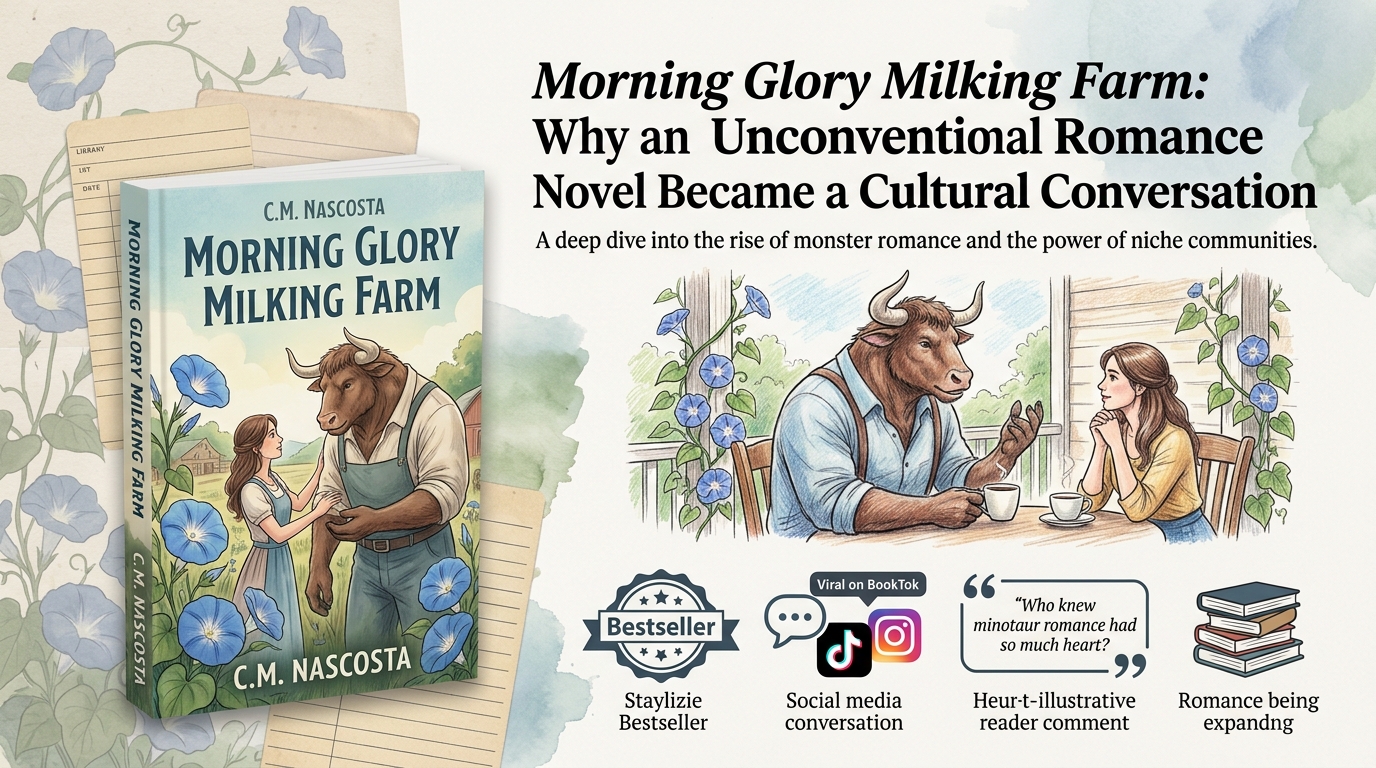
The modern publishing industry rarely pauses for surprise anymore. Viral trends emerge daily, genres evolve overnight, and online communities can transform obscure titles into bestsellers within weeks. Yet when Morning Glory Milking Farm began circulating across reading communities, many people reacted with a mix of disbelief and fascination. The title alone sounded intentionally provocative, almost designed to challenge conventional expectations about romance fiction. But beneath the internet jokes and social media reactions was something more significant: a novel that revealed how dramatically reader preferences and publishing culture have changed.
Written by C. M. Nascosta, Morning Glory Milking Farm became a standout example of how niche fiction can evolve into mainstream conversation through digital readership communities. While the premise initially attracted curiosity because of its unconventional fantasy elements, the book’s staying power came from something deeper. Readers connected not only with its imaginative world-building, but with its emotional realism, workplace themes, and surprisingly grounded exploration of loneliness, intimacy, and economic pressure.
For entrepreneurs, media observers, and modern publishing professionals, the rise of Morning Glory Milking Farm offers a fascinating lens into how internet culture now shapes literary success.
The Evolution of Modern Romance Fiction
Romance publishing has always adapted quickly to cultural shifts. From historical romances to paranormal vampires and billionaire dramas, the genre consistently reflects changing audience fantasies and emotional needs.
The popularity of Morning Glory Milking Farm reflects the latest stage of that evolution. Readers today increasingly seek stories that feel emotionally comforting while also offering novelty and escapism. This balance has become especially important in digital reading communities, where audiences consume books rapidly and constantly search for experiences that feel distinct from formulaic storytelling.
The novel exists within a growing category often referred to as “cozy monster romance,” a subgenre blending fantasy creatures with emotionally intimate, character-driven narratives. While the concept may initially appear niche, its success reveals how readers are redefining what emotional connection in fiction can look like.
Importantly, modern romance audiences are less concerned with traditional literary gatekeeping than previous generations. Readers discover books through social platforms, creator recommendations, podcasts, and online communities rather than relying solely on publishers or critics.
That shift has dramatically changed how unconventional stories gain momentum.
Why the Internet Helped the Book Go Viral
The rise of Morning Glory Milking Farm cannot be separated from online reading culture. Platforms like BookTok, Reddit, and niche romance forums have transformed readers into powerful tastemakers capable of driving massive commercial success.
What makes internet-driven literary popularity unique is that curiosity itself becomes part of the marketing cycle. In the case of this novel, many readers first encountered it through reactions to its unusual premise. Yet once audiences moved beyond the initial shock value, discussions shifted toward the book’s emotional sincerity and character dynamics.
This pattern reveals something important about modern digital culture: audiences often engage with unconventional content ironically at first, then sincerely afterward.
The internet rewards novelty, but sustained popularity still depends on emotional resonance. A title may attract clicks through curiosity, but readers only recommend books passionately when they feel personally connected to them.
That distinction explains why Morning Glory Milking Farm became more than a temporary viral joke. Readers genuinely found comfort and emotional depth within its fantasy framework.
The Emotional Themes Beneath the Fantasy
One reason the novel resonated so strongly is that its emotional core feels surprisingly relatable despite the fantastical setting.
At its heart, Morning Glory Milking Farm explores themes familiar to many modern adults: financial stress, isolation, workplace exhaustion, and the search for meaningful connection. The protagonist navigates economic insecurity, career frustration, and emotional loneliness in ways that feel grounded despite the imaginative world surrounding her.
This contrast between unusual fantasy and realistic emotional experience is central to the book’s appeal.
Fantasy fiction often succeeds because it externalizes real human anxieties through imaginative settings. Monsters, supernatural systems, and alternate worlds become metaphors for vulnerability, intimacy, and belonging.
Readers may initially approach the novel because of curiosity, but many stay because the emotional struggles feel authentic.
In a cultural moment shaped by burnout, economic uncertainty, and digital isolation, emotionally comforting fiction has gained tremendous traction. Audiences increasingly seek stories that provide reassurance alongside escapism.
How Publishing Has Changed in the Digital Era
The success of Morning Glory Milking Farm also highlights broader changes within the publishing industry itself.
Traditional publishing historically relied heavily on gatekeepers who determined which stories were commercially viable. Digital reading communities have disrupted that system significantly. Today, niche genres can thrive because online audiences self-organize around highly specific interests.
This transformation has created a more decentralized literary ecosystem.
Books no longer need universal mainstream appeal to succeed commercially. Instead, they need strong engagement within dedicated audience communities. Algorithms, recommendation culture, and reader-driven marketing now influence success as much as traditional advertising campaigns.
The publishing industry has adapted accordingly.
| Traditional Publishing Model | Digital-Era Publishing Culture |
|---|---|
| Broad mainstream targeting | Niche audience targeting |
| Critic-driven visibility | Community-driven discovery |
| Bookstore-centered marketing | Social media-driven marketing |
| Slow trend cycles | Rapid viral momentum |
| Institutional gatekeeping | Reader-led popularity |
This shift explains why unconventional books now achieve visibility at unprecedented speed. Reader communities function as both consumers and marketing engines simultaneously.
For entrepreneurs and founders, this trend mirrors broader digital economy patterns where niche communities create scalable influence.
The Rise of “Comfort Fiction”
Another major factor behind the popularity of Morning Glory Milking Farm is the increasing demand for comfort-driven storytelling.
Over the last decade, entertainment consumption patterns have changed noticeably. Audiences facing constant digital overload, economic anxiety, and cultural polarization often gravitate toward narratives that feel emotionally safe and reassuring.
Comfort fiction does not necessarily avoid conflict. Instead, it prioritizes emotional payoff, character intimacy, and reassuring narrative structure.
The novel fits within this movement because it combines imaginative escapism with emotional predictability. Readers understand that despite awkwardness, uncertainty, or tension, the story ultimately prioritizes emotional connection over cruelty or cynicism.
This tonal consistency matters in modern media environments where audiences often feel overwhelmed by negativity and constant stimulation.
The growing popularity of cozy fantasy, slice-of-life storytelling, and emotionally gentle romance reflects a broader psychological shift toward softer entertainment experiences.
Why Readers Are Embracing Unconventional Stories
One of the most interesting cultural developments surrounding Morning Glory Milking Farm is how openly readers now embrace unconventional fiction.
In previous decades, niche romance interests were often hidden or stigmatized. Online communities have changed that dynamic significantly. Readers now discuss highly specific genres openly, forming communities around shared enthusiasm rather than private consumption.
This openness reflects larger shifts in internet culture.
Digital platforms have normalized micro-communities built around specialized interests. Whether in gaming, entertainment, fashion, or literature, audiences increasingly seek identity and belonging through niche cultural participation.
The success of unconventional romance fiction demonstrates that modern audiences value originality more than conformity. Readers are increasingly willing to engage with stories that challenge traditional expectations as long as the emotional experience feels authentic.
Importantly, this trend does not signal declining literary standards. Instead, it reflects expanding definitions of what storytelling can include.
The Business Lessons Behind the Book’s Popularity
For entrepreneurs and creative professionals, the rise of Morning Glory Milking Farm offers several important lessons about audience behavior in the digital age.
First, niche markets can become commercially powerful when communities feel emotionally invested. Broad appeal is no longer the only path to success.
Second, authenticity matters more than attempting to imitate mainstream formulas. The book succeeded partly because it fully embraced its unusual premise rather than softening it for wider approval.
Third, online communities reward emotional sincerity. Readers often reject content that feels calculated or trend-driven, but they enthusiastically support creators whose work feels genuine.
Finally, curiosity is a powerful marketing driver, but emotional connection sustains long-term relevance. Viral attention alone rarely creates loyal audiences.
These principles apply far beyond publishing. Startups, creators, and modern brands increasingly succeed by building highly engaged niche communities rather than chasing mass-market universality.
The Future of Genre Fiction
The popularity of Morning Glory Milking Farm signals a future where genre boundaries continue dissolving. Romance blends with fantasy, humor intersects with emotional realism, and audiences embrace stories once considered too unconventional for mainstream visibility.
This evolution reflects changing consumer expectations.
Modern audiences want stories that feel emotionally honest while still offering originality. They value comfort but also novelty. They seek intimacy, imagination, and relatability simultaneously.
Digital culture accelerates these shifts by allowing communities to form around virtually any storytelling style or thematic interest.
As a result, publishing is becoming less centralized and more audience-responsive than ever before.
Conclusion: More Than a Viral Curiosity
At first glance, Morning Glory Milking Farm may appear to be simply another internet-fueled literary phenomenon. But its popularity reveals something much larger about contemporary culture.
Readers today are searching for emotional connection in increasingly fragmented digital lives. They are drawn toward stories that combine escapism with sincerity, novelty with comfort, and fantasy with recognizable human emotion.
The novel’s success demonstrates how modern storytelling no longer depends solely on traditional literary norms or institutional approval. Communities now shape cultural relevance directly, and unconventional narratives can thrive when they resonate emotionally.
In many ways, Morning Glory Milking Farm represents the future of entertainment itself: highly niche, deeply community-driven, emotionally authentic, and powered by digital conversation.
What once might have remained obscure now has the ability to define cultural moments—and that shift is transforming publishing in ways that are only beginning to unfold.