

It started with a complaint that sounded minor. A tenant in a mixed-use development emailed the property manager late on a Sunday evening: someone had parked in her assigned space again. There was no paper permit to check, no easy way to verify authorization, and no reliable record of who had registered which vehicle. By Monday morning, the issue had escalated into frustration, phone calls, and manual record searches.
This is precisely the kind of friction that platforms like register2park were designed to eliminate.
In an era where nearly every service has moved to a digital interface—from banking to building access—parking remains one of the last operational holdouts. Yet for entrepreneurs, property managers, and tech-forward founders, parking is not trivial. It influences tenant satisfaction, operational efficiency, security, and even revenue. Register2park represents a broader shift toward digitized infrastructure—where data replaces paper, and automation replaces guesswork.
Understanding Register2Park in Today’s Property Ecosystem
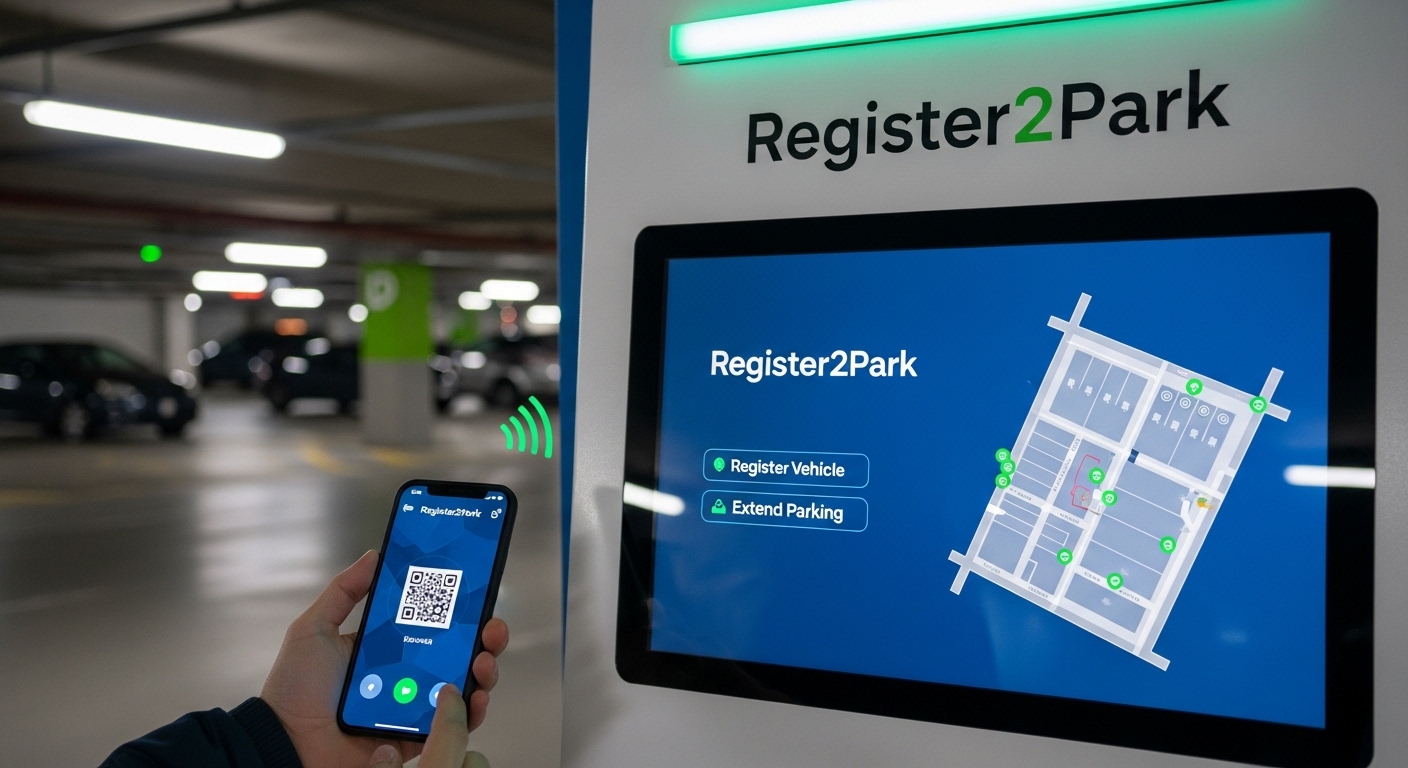
Register2park is a digital parking registration and management system designed primarily for private properties. Instead of relying on physical permits, paper passes, or windshield stickers, the platform allows users to register vehicles through an online interface.
At its core, the system replaces visibility-based enforcement with database-driven validation. When a vehicle is parked on-site, enforcement teams verify its license plate against a live digital registry. If the vehicle is authorized, it remains undisturbed. If not, enforcement procedures follow established policy.
This digital model reduces administrative overhead and eliminates common inefficiencies associated with manual permit tracking.
For founders operating in the property technology space, this is a case study in digitizing everyday friction.
Why Parking Technology Deserves Strategic Focus
Parking may appear mundane, but in residential, commercial, and healthcare properties, it shapes first impressions. A poorly managed lot signals disorganization. Unclear policies frustrate tenants. Manual oversight drains staff resources.
Entrepreneurs increasingly recognize that operational excellence often begins in overlooked systems.
Register2park addresses several longstanding issues:
Unauthorized vehicle access
Permit duplication or misuse
Administrative inefficiencies
Lack of usage data
Tenant disputes over space allocation
By digitizing authorization, the platform introduces structure into a traditionally informal process.
How Register2Park Works in Practice
The operational flow is straightforward but powerful.
Residents, employees, or visitors access a web portal where they input vehicle details—typically license plate number, make, and contact information. Property managers configure rules within the system, defining who can register, how many vehicles are permitted, and for what duration.
Enforcement officers then rely on handheld devices or integrated systems to confirm whether a vehicle is registered. Instead of scanning dashboards for stickers, they cross-reference plate numbers digitally.
This shift from visual verification to database confirmation enhances accuracy. It also creates an audit trail, documenting when and how a vehicle was registered.
For tech-savvy property owners, the data layer becomes invaluable.
Operational Advantages for Property Managers
One of the most compelling benefits of register2park is centralized oversight. Managers gain access to dashboards showing occupancy patterns, registration activity, and compliance levels.
The system enables administrators to:
Approve or reject vehicle registrations
Set time-bound guest access
Assign designated spaces
Monitor recurring violations
Generate compliance reports
This level of visibility transforms parking from a reactive issue into a proactive management function.
Entrepreneurs scaling property portfolios can standardize parking policies across multiple sites without increasing headcount.
Digital Parking vs. Traditional Permit Systems
The difference between legacy systems and digital registration becomes clear when examined side by side.
| Feature | Traditional Permit System | Register2Park Model |
|---|---|---|
| Permit Type | Physical sticker or tag | Digital license plate entry |
| Enforcement Method | Visual inspection | Real-time database check |
| Administrative Work | Manual distribution | Automated approvals |
| Fraud Risk | High (permit sharing) | Reduced (plate-specific) |
| Reporting | Limited tracking | Data-driven analytics |
The comparison reveals a familiar pattern seen across industries: digital transformation reduces friction and increases transparency.
User Experience and Accessibility
Adoption depends heavily on usability. A parking system that frustrates residents will quickly generate resistance.
Register2park platforms are typically web-based, accessible via smartphones and desktops. The registration process is designed to be quick, requiring only essential vehicle information.
For guests, temporary access can be issued without physical handoffs. For businesses, employee vehicles can be pre-authorized in batches.
This simplicity reduces support requests and improves overall satisfaction.
For founders designing digital services, intuitive onboarding remains essential.
Security and Data Responsibility
Because the system stores vehicle data, privacy and compliance are critical considerations.
Responsible parking platforms implement encrypted data storage, secure authentication, and defined retention policies. In regions governed by strict data regulations, such as GDPR, these safeguards are non-negotiable.
Entrepreneurs integrating register2park into broader property ecosystems must ensure alignment with privacy standards and internal governance frameworks.
Digital infrastructure must prioritize trust.
Integration with Broader Smart Property Systems
Modern buildings increasingly rely on interconnected technologies—access control, surveillance, visitor management, and tenant portals.
Register2park fits naturally within this ecosystem. Parking authorization data can complement building access logs, providing comprehensive visibility into property usage patterns.
For tech founders exploring IoT-enabled real estate, parking data may inform decisions about capacity planning, peak traffic hours, and infrastructure investment.
What once was an isolated operational concern becomes a measurable asset.
Challenges in Implementation
Transitioning from paper permits to digital registration requires change management. Residents accustomed to physical passes may initially resist online systems.
Clear communication and onboarding support ease this transition. Property managers must explain benefits—reduced disputes, streamlined access, improved fairness.
Connectivity reliability also matters. Backup procedures should exist to handle system downtime.
Like any technological upgrade, thoughtful rollout determines long-term success.
Scalability and Portfolio Management
For property management companies overseeing multiple buildings, consistency is key. A unified digital parking platform allows centralized oversight across sites.
Data aggregation supports portfolio-level insights. Managers can compare occupancy rates between properties, identify patterns, and optimize allocation.
Scalability reduces operational complexity as businesses grow.
For founders focused on expansion, infrastructure that scales efficiently supports sustainable growth.
The Broader Shift Toward Frictionless Infrastructure
Register2park reflects a larger movement toward invisible, frictionless systems. Consumers now expect services to function seamlessly in the background.
Mobile boarding passes replaced paper tickets. Digital wallets replaced cash. Keyless entry replaced metal keys.
Parking, too, is evolving.
Entrepreneurs who recognize friction points in traditional systems often uncover opportunities for innovation. Register2park exemplifies how incremental digital improvements can deliver significant impact.
Conclusion: Small Systems, Significant Impact
The tenant who once emailed about unauthorized parking now checks her assigned space without concern. The property manager reviews digital logs rather than paper files. Enforcement operates with clarity instead of assumption.
Register2park does not reinvent mobility. It refines it.
For entrepreneurs and tech leaders, the lesson is straightforward. Innovation thrives not only in grand visions but also in the quiet modernization of everyday systems.
Parking may not dominate headlines. Yet when managed intelligently, it enhances efficiency, trust, and operational excellence.
In a digital-first world, even the parking lot deserves transformation.